
When Health Challenges Change Your Career Plans: My Ecology Journey
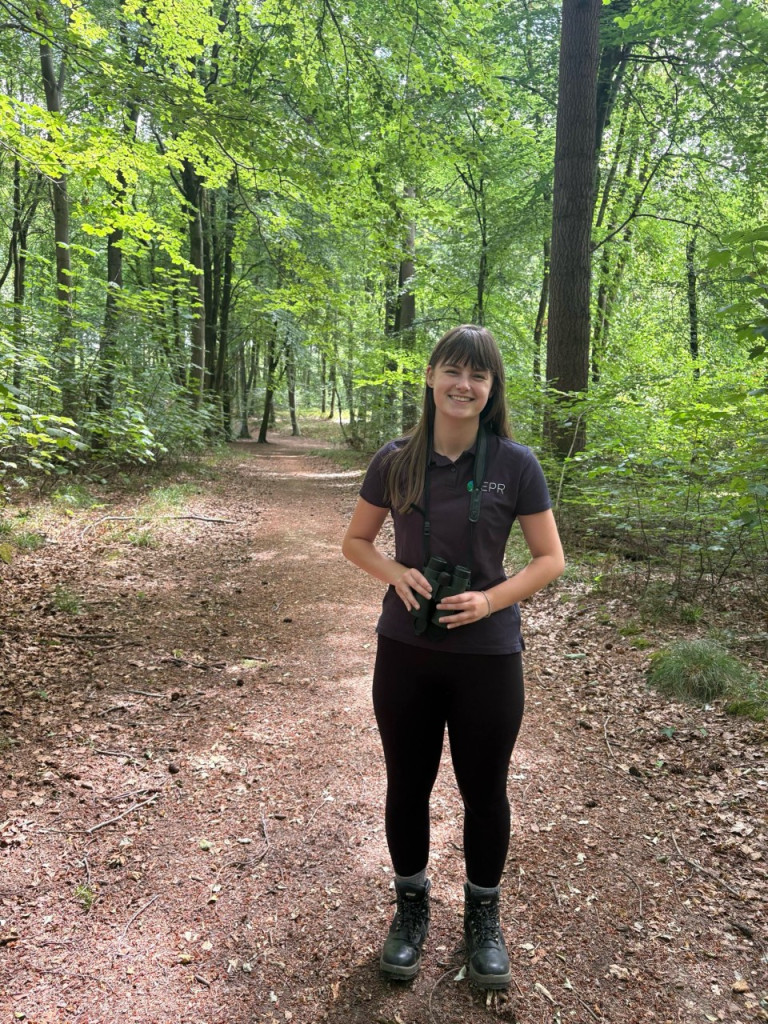
‘I turned the lack of a driving licence from a limitation into an opportunity, proving that determination, adaptability, and resourcefulness can take you just as far.‘
The day I had my first “episode”, I was terrified. In the ambulance, I could not stop thinking about how I would no longer be able to learn to drive after today and any remaining chance I had at getting a job in the sector that I worked so hard to get into had come crashing down. I was later diagnosed with Vasovagal Syncope which is common in young adults.
Finding an early career position in the ecological sector, as most will know, is incredibly difficult without even factoring in medical conditions. There is a great deal of competition for entry positions in ecology as they rarely appear. Becoming familiar with rejected applications was something I quickly came to grips with. On scarce occasions ecological roles that did not require a driving licence would appear and I would apply instantly. However, this made an already competitive process feel even more daunting.
I reached out to many ecological professionals for advice on how to get into the sector, but I was constantly told that getting a driver’s license is key for working in the industry (especially in consultancy) which was the one thing that was impossible for me to achieve. However, I am here to tell you to not give up hope!
‘I am an example of someone who managed to secure an ecological role with a medical constraint.‘
I started off in a bespoke seasonal position as a ‘Survey Technology Support’ which was predominantly desk-based with intermittent field work. I would car share with colleagues to do fieldwork where possible or alternatively get public transport to meet members of staff at a suitable train station. Although a permanent position was not guaranteed after this temporary role, this was still a season I had experienced in ecological consultancy which helped me gain valuable experience and would look appealing to future employers. Fortunately, two permanent positions opened, and I was lucky to gain my current role as ‘Field Data Coordinator and Timetabler’.
I am so grateful to finally have a foot in the door of the ecological industry. However, it wasn’t an easy ride! Studying hard in university and not being able to secure a job resulted in demotivation and negative mental health. I couldn’t take part in much voluntary work or attend face to face courses because I had no way to get to sites and public transport did not run during the evening hours when most ecological work happened. I wanted to be independent, but I constantly had to ask my mum to be my personal taxi driver. It felt like every opportunity I needed to grow my ecological skills and become employable was out of my reach. Persistence is key! Those barriers were frustrating, but I was determined to keep looking for alternative routes into the sector.
What I Did!
Building your Ecological Network
Don’t hesitate to reach out to people in the ecological sector on LinkedIn. Use the search bar to look up keywords such as ‘ecology’ and connect with professionals. If you went to university, search your institution and select the alumni tab to find graduates working in ecology and follow their journeys.
Networking can open real doors. I secured my current role after connecting with a local ecologist who recommended me to contact Ecological Planning and Research Ltd. Even though they had no vacancies at first, staying in touch with the HR manager and one of the Directors led to an interview later in the year when positions opened.
Gaining Experience
- Online Courses – Look out for courses that are free or within your budget range (these don’t always have to be expensive and some offer bursaries).
- Volunteering – If travel is difficult, ask local wildlife groups about remote tasks such as data entry.
- Talks and Events – Look for online webinars if transport is a barrier.
- Joining CIEEM – guidance for early careers.
Although I have been fortunate enough to be cleared to drive now for many people their medical circumstances do not change. I am hoping more companies follow in the footsteps that Ecological Planning and Research Ltd took in being more flexible and inclusive with people who have a long-term health condition or disability. I understand it is important to be able to drive to complete site work, however there are also many alternative desk-based roles. By creating more flexible routes into the sector, employers can help talented and determined people build careers in ecology, even when the traditional path is not accessible. Greater flexibility could give more people the chance I was given: to prove that passion, determination and ability matter just as much as a driving licence. If the sector is willing to think more flexibly, it can become a place where more people are able to contribute, grow and thrive.
Uploaded: 24/08/26