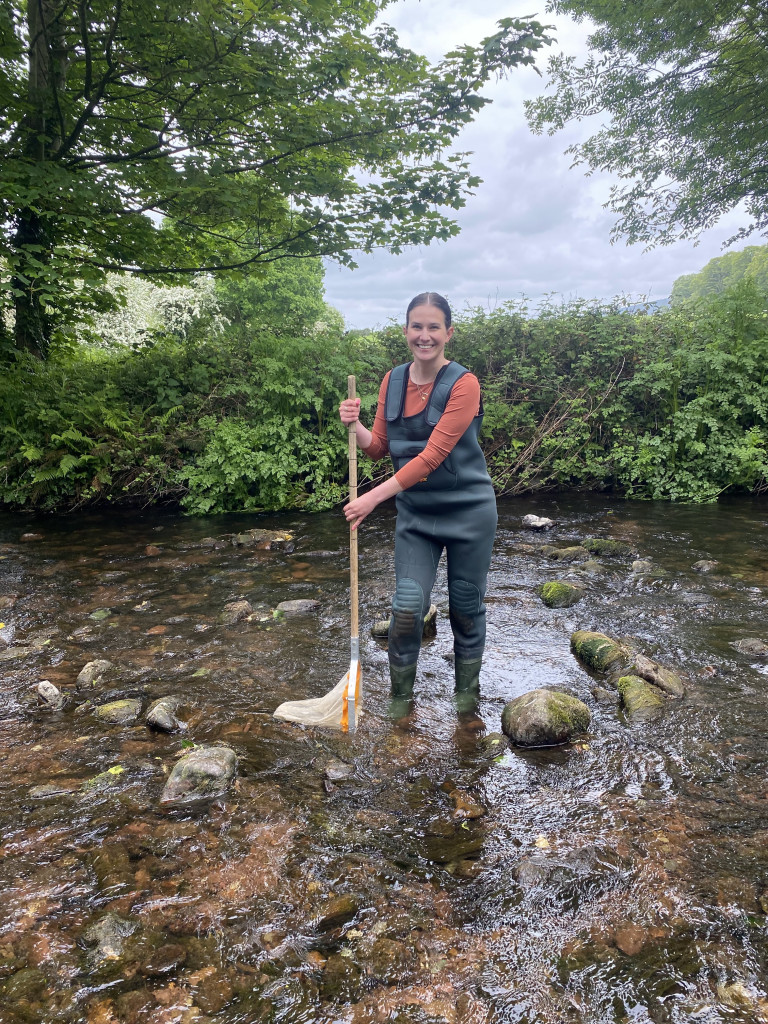
Kate Quirke
What employment sector do you work in?
Private sector
How long have you had a green job for nature?
8 years
Please describe the work that you do.
I’m a Senior Ecologist with Aqualicense, an environmental consultancy in Ireland, working remotely. My work is mostly marine, mixed with some terrestrial ecology (where I cut my teeth in consultancy). Before that, academia gave me a blend of lab, field and computer-based research. Though largely desk based now, I still get out surveying habitats and species, and my work centres on ecology and environmental reports, aquaculture, GIS, policy, tenders, training ecologists and liaising with clients.
What do you most like about your job? Any dislikes?
I love the variety. One week I’m surveying invasive species on a shellfish farm, the next researching a topic for a literature review. I’m constantly challenged to learn about subjects that fascinate me: aquaculture, restoration, marine protected areas, renewables. While I loved academia, I enjoy how my work now feeds into real environmental decisions. As for dislikes, the unsociable bat survey hours were not for me (I love sleep too much) and I’m glad to have moved on from those, but they were great experience that got me to where I am today.
What inspired you into this career?
I grew up near the coast and spent my childhood with my head in a rockpool alongside my Dad. He bought me colouring books on the ocean, which led to more books, documentaries and, of course, David Attenborough. I always knew I wanted to work in the natural sciences, and as a child cycled through the classic job choices, meteorologist, volcanologist, palaeontologist, but everything came back to the marine. My PhD on intertidal species showed me just how extreme an environment our doorstep holds, and this fascination continues to inspire my career.
Have you faced any challenges in progressing your career so far?
Dedicated marine ecology roles in Ireland are scarce, so I built my career by being adaptable and working across both terrestrial and marine projects, which turned out to be a strength rather than a compromise. Moving from academia into consultancy was also an adjustment due to a change in pace, working with clients, different writing styles, and commercial deadlines. These challenges were worth it, but there is no map for ecology careers making navigation difficult.
What education/training did you have?
I have a BSc in Zoology, MSc in Marine Biology and PhD from University College Cork. My doctoral research focused on the biology, health and population dynamics of the common cockle as part of an large European project. Through consultancy I’ve trained across terrestrial disciplines, including habitat, bat and bird survey methods. I enjoy upskilling regularly, and have undertaken botany courses, freshwater pearl mussel survey training, Marine Mammal Observer training and recently completed a micro-credential in Environmental Impact Assessment for Offshore Renewable Developments.
What advice would you give to someone coming into the profession?
Build your network and learn from others. Joining CIEEM or another professional body is a great opportunity, and I have gained so much from their mentorship programme and training opportunities. Attend conferences and webinars, join your friends on surveys, take part in citizen science and say yes to any opportunity to learn or get out of your comfort zone. Good luck!
—
Tags: Republic of Ireland, Private sector, Ecologist, Ecological consultant, Marine/Coastal
Date profile submitted: 02/07/2026
Related Job Profiles
Conor Daly
Alice Moore
Constance Schéré