Living and Working as a Field Ecologist with an Ileostomy: How My Stoma Gave Me My Life Back

Two years ago, I was lying in a hospital bed, hooked up to IVs, my body exhausted from only 18 harsh months of battling ulcerative colitis. I had tried every treatment available to no avail- tablets, infusions, at home injections, chemotherapy. I had spent months of my life in and out of hospital, often unable to stand long enough to brush my teeth without feeling dizzy or collapsing. I couldn’t walk to the end of the road without pain and exhaustion overwhelming me, finding myself bound to a wheelchair on family holidays. At that time, I truly believed my days of hiking, camping, exploring wild landscapes, and even living independently were over.

When doctors told me I needed an ileostomy to survive, it felt like my world had shifted in an instant. I was just 22 years old, in my final year of studying Environmental Sciences at the University of East Anglia, and my dissertation deadline was looming. I underwent life-saving stoma surgery in the middle of exam season, unsure if I’d even be able to finish my degree. But I refused to let my illness dictate the end of my story. I completed my final submissions and proudly attended graduation, knowing the resilience it took to get there.
After surgery, I made myself a promise: I wouldn’t let my stoma be a limitation. If anything, I would use it as proof that life after illness can still be full, challenging, and adventurous.

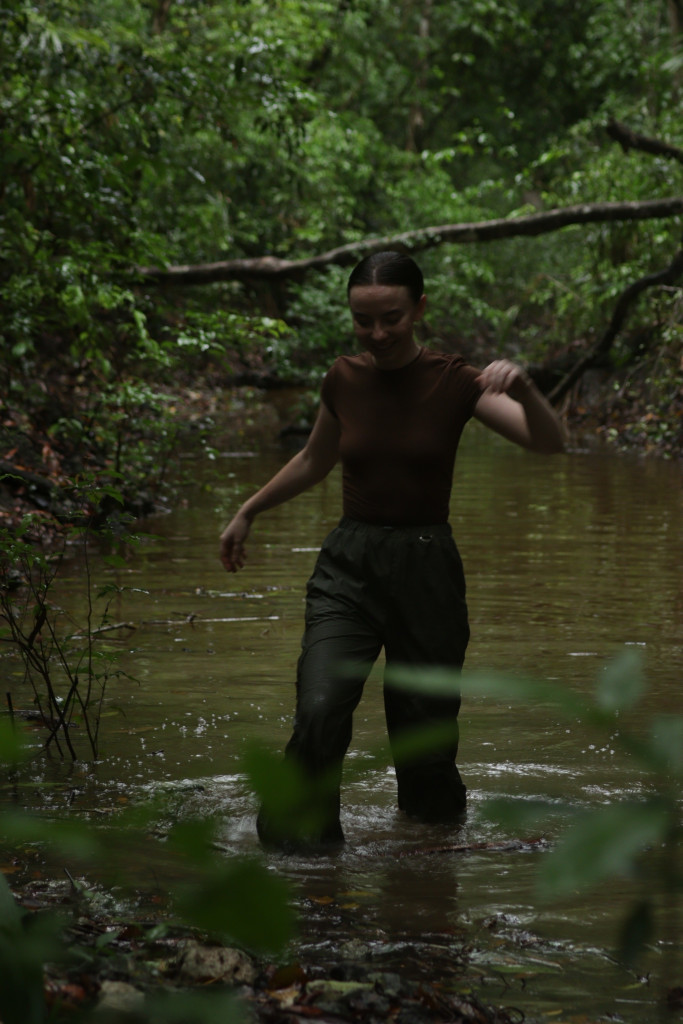
My first job after graduating was as far from “comfortable” as you can get: working as a lepidopterist in the Mayan jungle of Calakmul, Mexico. For weeks at a time, I lived in a tent or hammock with no toilets, no electricity or phone service, no running water, and a very restricted diet, three hours away from any local towns and hospitals. The heat was relentless, the humidity clung to my skin, and every day was physically demanding. But I was there, working, laughing, and thriving in the middle of the jungle — something I could never have imagined when I was stuck in a hospital bed just a couple of months before. I ended up celebrating my one year ‘stoma-versary’ in that jungle. That job was more than a career step; it was a statement to myself: You are capable. You can do hard things. You can live fully.
But life had one more hurdle in store. While I was in Mexico, I began to feel unwell again. Tests revealed that leftover infection in my rectum was putting me at an increasingly high risk of rectal cancer. Only nine months ago, that meant another emergency surgery — a proctectomy — to make my stoma permanent. It was just before Christmas 2024, and it hit me hard. It felt like I had only just gotten back on track, and here I was again, in a hospital bed for weeks having my life changed forever. I never imagined that I’d be back working in the field only a few months later, but I was determined not to let my recovery stop me.
Coming that close to dying — twice — gave me a perspective I’ll never lose. It’s a constant reminder that life is fragile, and that every single day matters. I don’t want to waste my second chance. That’s why I pour myself into my work as a field ecologist: because it allows me to be outdoors, surrounded by nature, living in the very landscapes that make me feel most alive. Whether I’m watching the first light of dawn through a forest canopy, crouched in the grass during a reptile survey, or listening to the quiet rustle of dormice in their nests, I know I am exactly where I’m meant to be.
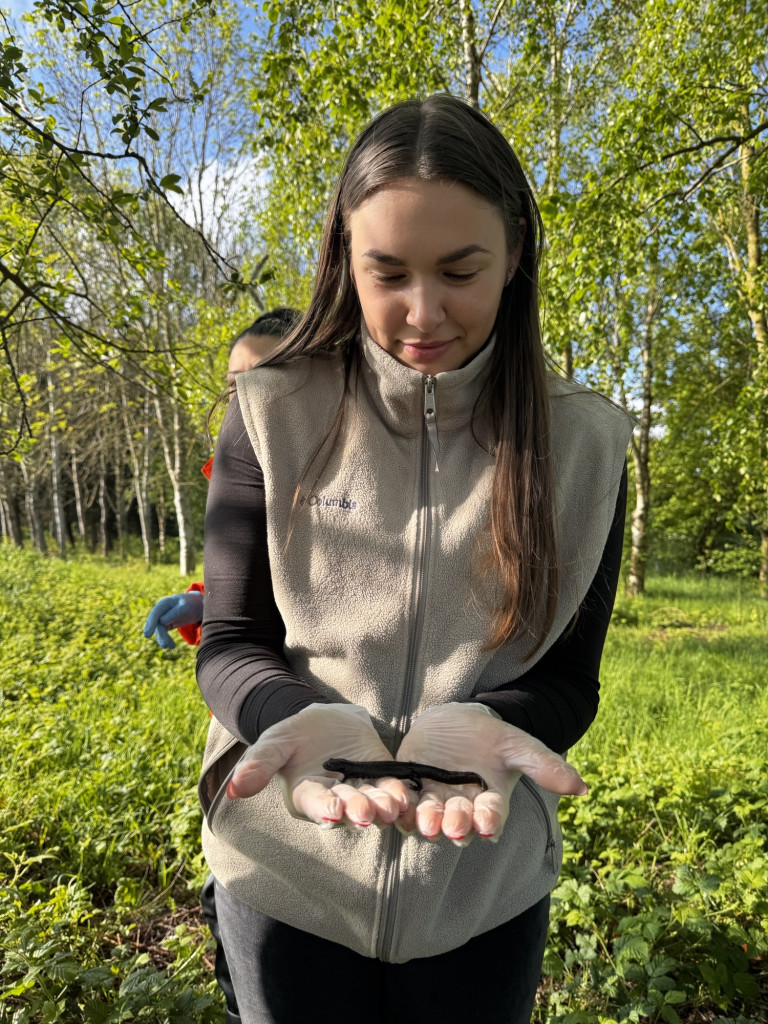
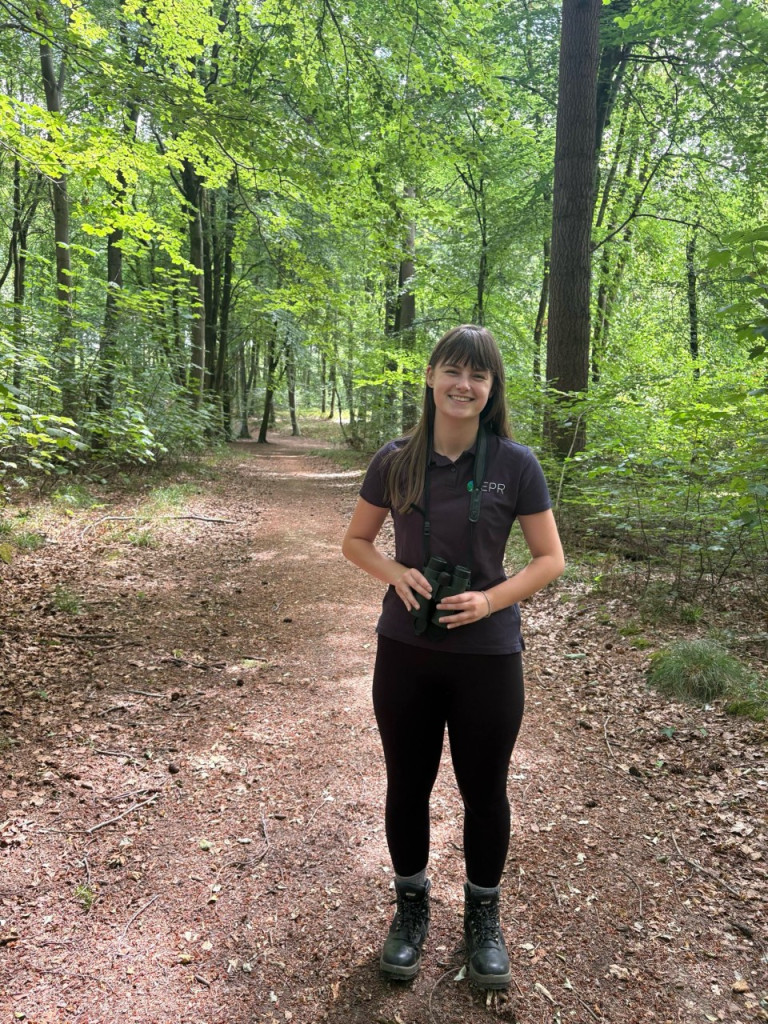
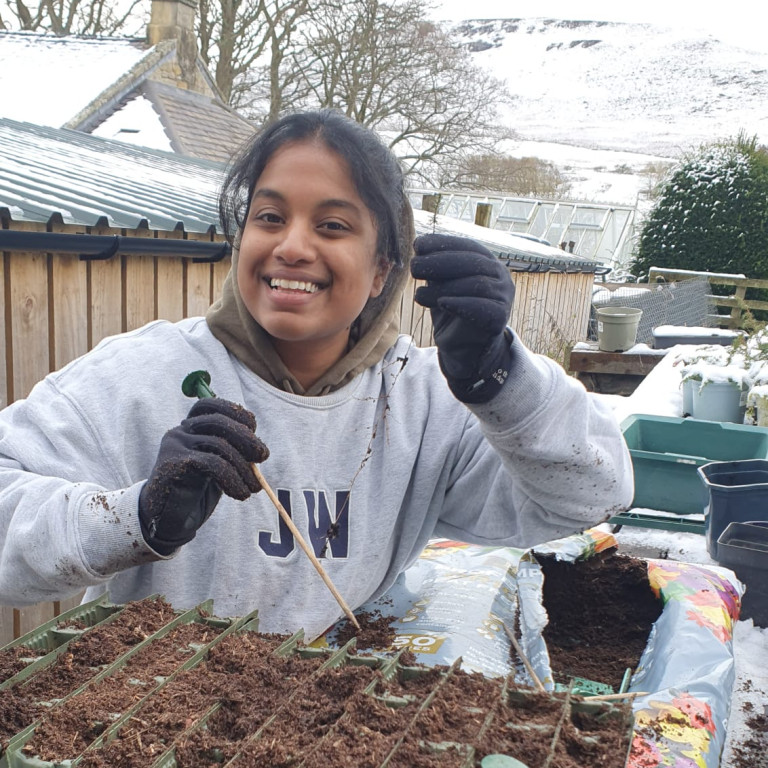
Now, I work as a field ecologist in the UK, and my days are as varied and physically demanding as ever. In the height of summer, I might walk 15,000 steps a day in the heat, carrying equipment over rough terrain. I conduct dormouse checks, take part in reptile translocations, and work as an Ecological Clerk of Works (ECoW) on construction sites — jobs that often mean being far from a bathroom for hours, wading through dense undergrowth, or scrambling over uneven ground.
I still live with chronic fatigue as a result of my health issues, and some days my body feels heavy with exhaustion, especially at the height of the UK field season where work hours follow a late sunset and early sunrise. But every step I take in my work is a step I couldn’t have taken without my ileostomy. My stoma hasn’t taken away my life — it has given it back to me in ways I never thought possible.

When I was ill, I thought my world had shrunk forever. I thought I’d never camp again, never hike in remote landscapes, never have the stamina to work in the field. But my reality now is the opposite. I’m doing all of those things, and more.
That’s why I want to share my story. I want others living with disabilities or long-term health conditions to know that while life may change, it doesn’t have to stop. There’s no shame in having a stoma, in adapting how you do things, or in needing to work differently from others. Your capabilities are not defined by other people’s assumptions — or by your own fears.
If you’re reading this and feeling like your dreams are out of reach because of your health, I want you to know that it’s possible to rebuild your life. It might not look exactly the same as before, but it can still be adventurous, fulfilling, and full of joy.
My stoma is part of me, but it is not the end of me. It is the reason I can trek through woodlands at sunrise, camp under the stars, and work in the wild landscapes I love. It is why I can stand in the middle of a meadow, feeling the sun on my face and knowing — truly knowing — that I’m alive.
I’m not just surviving anymore. I’m living the life I once thought was gone forever, and if my story can show even one person that their own life is still theirs to shape, then every mile I’ve walked and every challenge I’ve faced has been worth it.
Posted: 08/09/2025