Seasonal Rangering: A Path into Conservation

How it all began
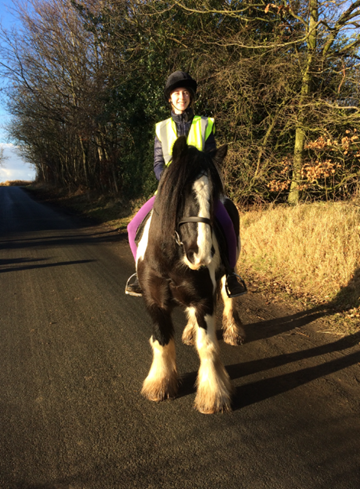
I wasn’t always interested in a career in conservation. During and after high school I started working towards a career in the equine industry, as I had grown up around horses and wasn’t sure what else I could do. Despite growing up in the countryside and being very much a part of it, I felt that an actual paid role there was unattainable – I had no idea how to go about getting one, and there was limited volunteering on offer in my area that interested me. I didn’t feel qualified enough, or experienced enough, and stuck to what I knew – horses! But that didn’t feel quite right. The great outdoors were calling, and I wasn’t really able to answer from the stable yard!
Changing paths
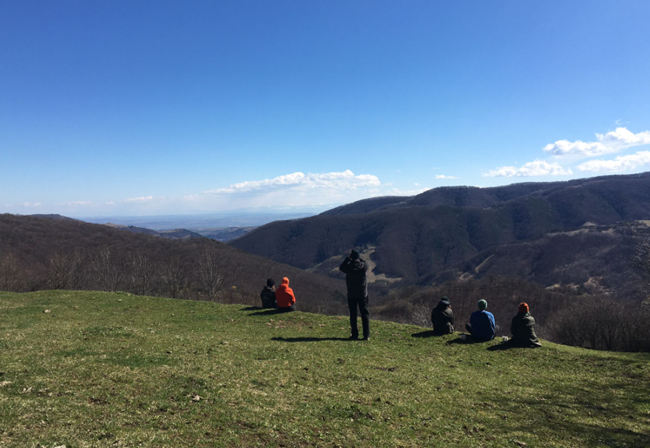
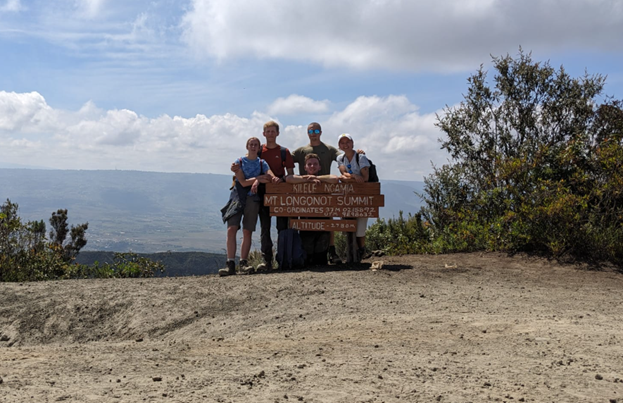
When I was 19 I started a degree in Wildlife & Conservation Management with Scotland’s Rural University College (SRUC), after completing two National Certificates (NCs) there – Horse Care and then Countryside Management. I was a bit nervous at first – although I was entirely at home in the countryside, and could identify many of the species around me, I wasn’t very sure about how I could shape this into a career. I was also about 10 years younger than the average age of my class, with pretty much all of my classmates being career changers with a lot more life experience than me. But I can’t deny that the course has been instrumental in helping me not only to grow out of my teenage shyness, but also to take every opportunity to learn. Over these past four years I have been to Romania and Kenya, obtained my great crested newt survey licence and chainsaw maintenance & crosscutting ticket, made lifelong friends among my classmates and learned many different aspects of conservation management. I also got my first taste of conservation volunteering.
Volunteering
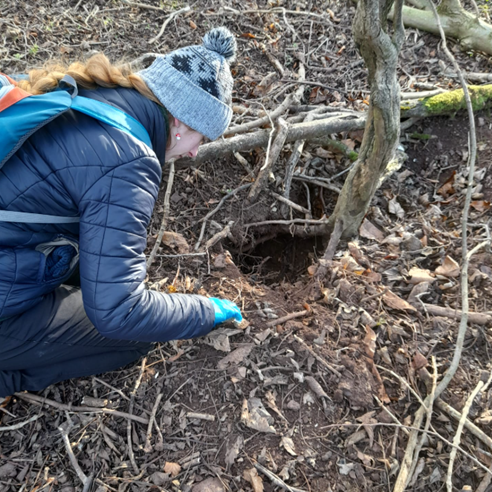
Everybody says it, and it’s kind of true – volunteering does get you places! And it doesn’t have to be in a relevant sector, either. I found that my time volunteering in riding schools was actually really useful, as it developed my ability to talk to all kinds of people about all kinds of things, and got me outside and keeping fit. But there are lots of opportunities if you know where to look, even if they don’t align with your dream job. I would really recommend getting in touch with your local ranger service to see what they have available – I have undertaken path surveys for the East Lothian Ranger Service, and gained practical experience in path maintenance and public engagement as a result. Even if they don’t have anything that takes your fancy, they may be able to point you in the direction of other conservation organisations in the area that you can get involved with, such as RSPB or your local Wildlife Trust. Depending on your area, there may be more species-specific organisations, like your local amphibian & reptile group, to get involved with. These can be great for working towards a protected species licence (e.g. great crested newt), which is brilliant to have on your CV.
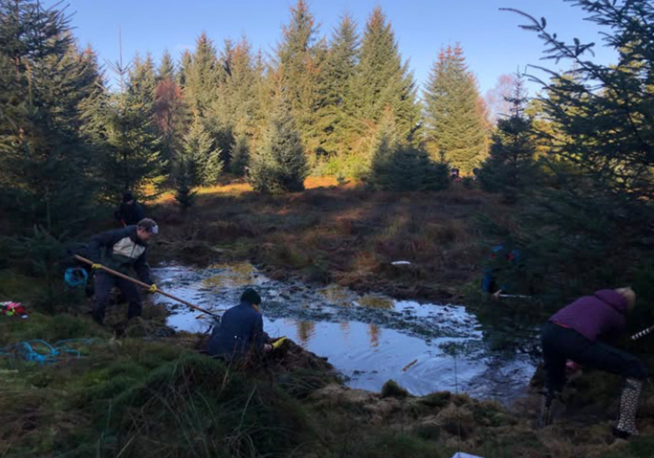
Long-term residential volunteering is also an option. I undertook residential volunteering on the Isle of Rum, off the west coast of Scotland, handling the working Highland ponies and undertaking general tasks such as path maintenance and wildlife surveys. I do appreciate that this is not something that is viable for everyone, due to other commitments or financial or time constraints, but if you think it could be for you then I would encourage you to have a look at what might be available. Countryside Jobs Service is an invaluable tool in my arsenal for finding opportunities!
One foot on the career ladder
Despite all of this learning, and bits and pieces of volunteering, I’ll be honest – I was still missing that practical element that I needed. I began to focus on two main career paths – ranger work and ecology – but I still didn’t feel prepared. My course gave me the theory behind different jobs, and through volunteering I could undertake various practical tasks, but I had no clue about the ins and outs of what I wanted to do. I still felt too young and inexperienced. I regularly trawled the Countryside Jobs Service and Environment Job websites, as well as other conservation sites which didn’t always advertise widely. I had lots of unsuccessful applications and interviews, but kept going.
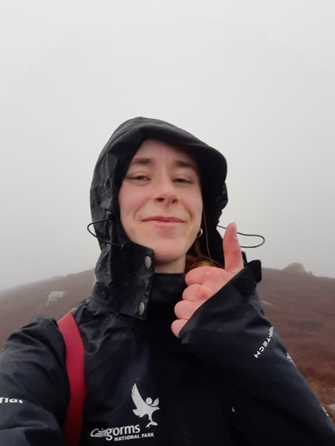
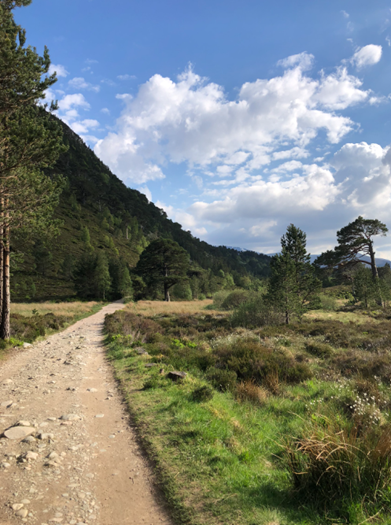
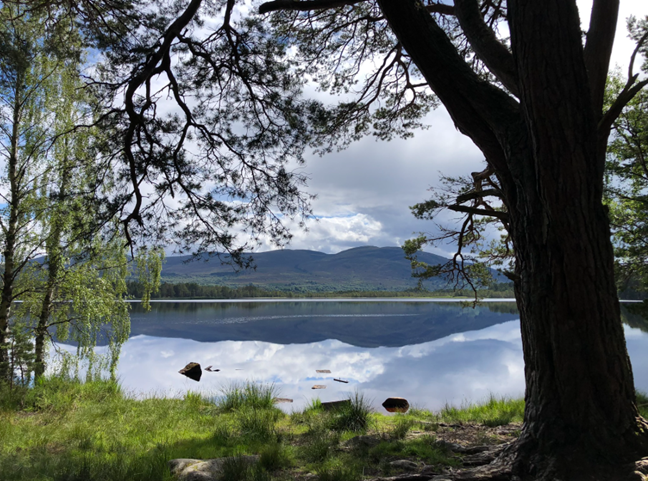
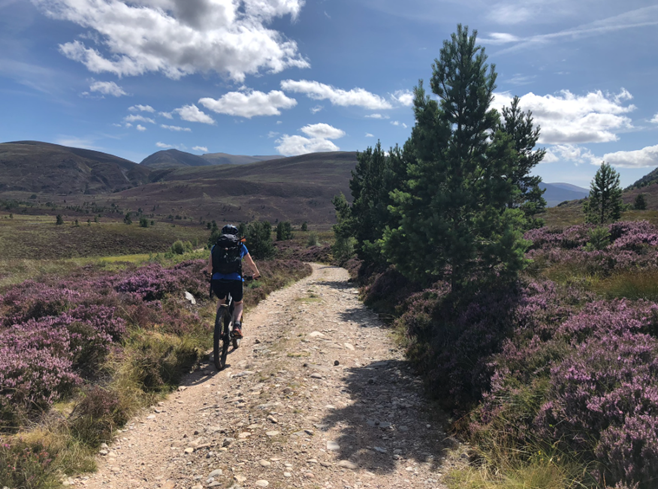
My first proper breakthrough into the world of conservation careers came in 2024, when I gained a role as a Seasonal Forest Ranger with RSPB in the Cairngorms National Park. I still think the rangers took a chance on me, but I’m eternally grateful they did as it gave me much-needed experience in the field. Lots of visitor engagement (some challenging conversations, many rewarding ones), identifying weird and wonderful species, and working in an absolutely breathtaking landscape – I loved it! And it was one of those rare seasonal roles that fitted in with the academic year finish and start times, so it suited me perfectly.
Now, I’m just starting my next seasonal role – a Seasonal Ranger with the Cairngorms National Park Authority – and very excited for the season ahead! Seasonal jobs are really good for gaining experience, as there is very little management required (aside from occasionally managing volunteers) so it is easier to explore the role at your own pace and get to grips with what is required. It also doesn’t carry the commitment of a permanent role, which is good if you find that it’s not for you. The tricky bit is finding something between seasons! This is something I have not yet experienced, as the academic year would begin just before the ranger season ended.
So… what’s next?
For now, the busy summer season ahead awaits. I don’t know yet what opportunities will arise, and there are lots of options at the end of the season – the most appealing so far are to either find a permanent role, if one is available, or to undertake conservation work abroad. This highlights another benefit of this sector – work doesn’t need to be limited to the UK! Many other countries offer positions – both paid and unpaid – in conservation.
It’s important to remember that there are no rules laying out career progression – you can wing it if you want to, or you can pick a direction, or gain transferable skills in a completely different field… anything really! The outdoor sector is so wide, and there are so many opportunities available once you know where to look. I hope my own little story provides some encouragement when it comes to taking these opportunities – you never know where you might end up, and you’ll make some fantastic memories along the way! Apply to everything you like the sound of, even if you don’t think you meet all the criteria, and don’t be afraid to get your name out there.